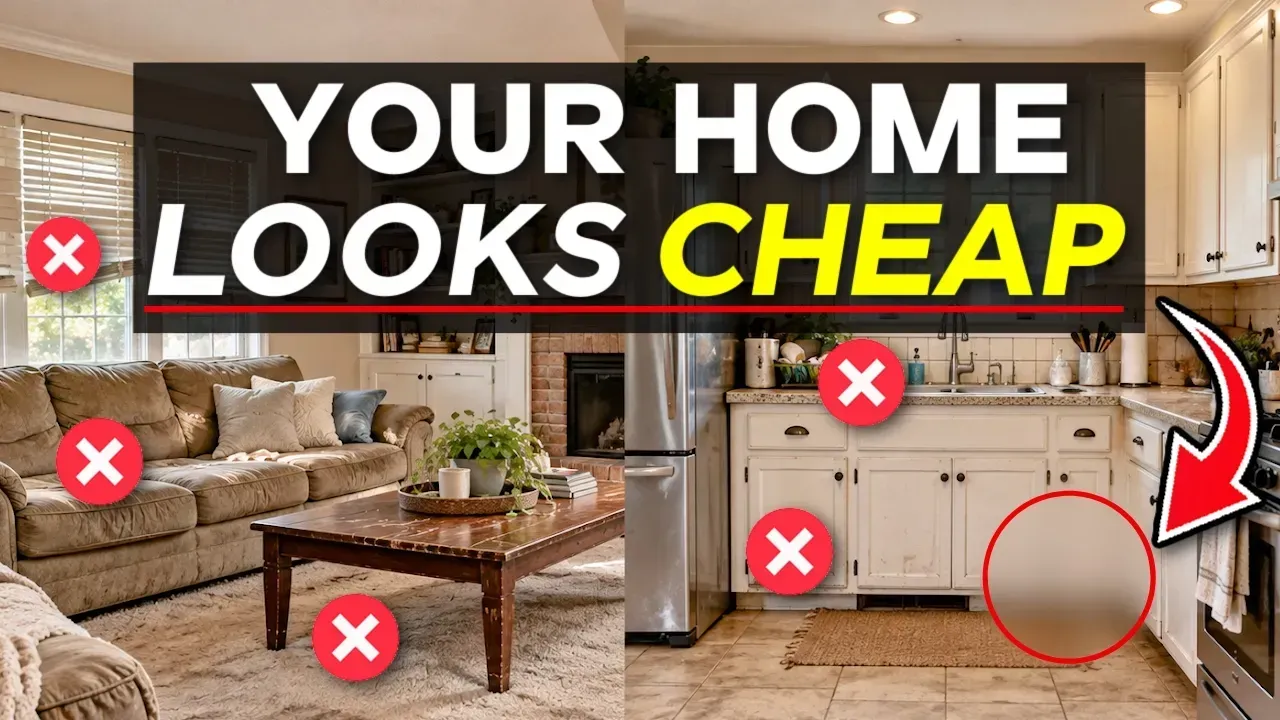
Why Every House Built After 2010 Feels Off (And What To Do About It)
If you’ve toured newer homes in Huntington Beach or Orange County and thought “this looks perfect, but it doesn’t feel like home,” you’re not alone. Below is the why—and the fixes.
Watch the full video: If you prefer to hear the breakdown and examples, the video is embedded below.
If you want an agent who focuses on how a home will actually live day-to-day—not just how it looks in listing photos—reach out here: www.jebsmith.net/contact-me
Why newer homes can feel “off” (even when they look perfect)
You walk into a newer home and everything is “right” on paper: clean lines, shiny finishes, open layout, tall ceilings, big kitchen island. And then your brain hits the brakes.
That reaction is common—especially in Huntington Beach and Orange County, where buyers regularly tour newer construction, flipped homes, and “Instagram-ready” remodels. Many people describe the same feeling: sterile, echo-y, cold, or oddly unsettling.
This isn’t about being anti-modern. A modern home can absolutely feel warm. The problem is that a lot of post-2010 residential design removed the very ingredients that make spaces feel human: texture, rhythm, and transition.
Built to sell vs. built to live: what changed after 2010
Over the last 10–15 years, residential design shifted from “how do people live here?” to “how does this photograph?” Builders and developers began optimizing for:
- Listing photos and wide-angle lenses(the house has to “pop” on a scroll)
- Big square footage numbers(even if the layout doesn’t function well)
- Open layouts and giant islands(a familiar, repeatable template)
- Speed and margin(standardized details, fewer trades, fewer custom elements)
In Orange County, this shows up in a very specific way: homes that check every box—yet don’t inspire anything. They feel like a product, not a place.
Why this hits Huntington Beach and Orange County especially hard
Huntington Beach and much of Orange County sit at the intersection of high land values, tight inventory, and competitive pricing. That pressure often pushes builders toward:
- Maximizing the number of homes on a lot
- Going tall and skinny
- Reducing yards and outdoor “breathing room”
- Removing architectural details that cost time and money
The result is a lot of square footage—without the “soul” that makes a home feel grounded and welcoming.
Why new builds feel like hotels or hospitals
Most new construction interiors follow the same formula:
- Flat white paint
- Smooth drywall
- Minimal trim
- Hard floors throughout
- Overhead recessed lighting (often bright, cool LEDs)
- Large, uninterrupted wall planes
All of that creates a “commercial” vibe. It’s clean and bright, but also clinical. You often get echo, reverb, and a subtle feeling of tension—because the space isn’t absorbing sound or creating visual comfort.
Key idea: Cozy isn’t a style—cozy is a set of design signals. When those signals disappear, the space can feel sterile.
The missing character problem: texture, detail, and intention
Older homes—especially mid-century and late 20th-century homes across Orange County—often include:
- Archways and niches
- Built-ins and functional nooks
- Window casings and trim profiles
- Fireplaces that anchor the room
- Layered materials that add warmth
Many newer homes replace all of that with: drywall boxes, recessed lights, and a single accent wall.
Why buyers immediately feel the difference
When someone walks into a bungalow, cottage, or a well-kept 60s/70s home, they’ll often say: “This feels warm.”
That’s not just nostalgia. It’s proportion, material, and intention. The space feels like someone designed it for humans—not for an algorithm.
High ceilings and the cathedral effect: when “luxury” creates discomfort
The average ceiling used to be around 8 feet. Today it’s common to see 9, 10, even 12 feet in many newer builds and remodels. High ceilings can be beautiful—but they can also be psychologically unsettling for some people.
What the cathedral effect means in real life
Higher ceilings can encourage abstract thinking, but they can also make a space feel less grounded—especially when combined with minimal furniture and reflective surfaces. Add in echo and harsh lighting, and a room can feel “big” but not “comfortable.”
If you’ve walked into a newer Huntington Beach home and felt like you were in a lobby, this is often a big reason why.
Open floor plans: pretty, but often stressful in real homes
Open floor plans look amazing in listing photos and on walkthrough videos. The problem is that real life doesn’t live inside a wide-angle lens.
Why open layouts can create daily friction
- Noise bleed: kitchen, TV, conversations, kids—everything competes
- No privacy: it’s hard to decompress when there’s no separation
- No visual break: your brain never gets a “reset” between zones
- Work-from-home reality: concentration becomes harder
Open concepts tend to work best when the home is large enough to also include separate offices, dens, or retreats. In many Orange County homes—especially in tighter footprints—that separation doesn’t exist.
Practical tip: If you love open concept, make sure the home still has at least one quiet “escape room” that’s not connected to the main living zone.
Lighting: the overlooked comfort killer
Lighting is one of the most overlooked reasons modern homes feel cold. Older homes tended to have layered lighting:
- Lamps
- Sconces
- Fireplaces
- Warm bulbs
- Natural light balanced with softer interior light
Many newer homes rely on bright overhead LEDs only. That can feel harsh and keep your brain in a state of alert, instead of calm.
What to look for in Huntington Beach and Orange County homes
- Do you have options beyond overhead lighting?
- Are there outlets placed logically for lamps?
- Is the lighting temperature warm enough to feel comfortable?
The death of the hallway: why transition spaces matter
Builders call hallways “wasted space.” In reality, hallways are transition zones. They create privacy, boundaries, and mental resets between rooms.
In many newer layouts, the primary bedroom opens directly off the kitchen or great room. That lack of separation can subtly increase stress and reduce the feeling of refuge in your home.
Why many older Orange County homes feel better (even if they’re not flashy)
More buyers are gravitating toward homes from the 60s, 70s, and 80s across Orange County. They often aren’t as “trendy,” but they feel real.
- Defined rooms and boundaries
- Human-scale proportions
- Materials that add warmth
- A layout designed for daily life (not just entertaining)
In other words: they feel like homes, not products.
What to do about it: practical fixes for homeowners and buyers
1) Add soft surfaces to absorb sound
- Rugs (especially in large rooms)
- Curtains or drapes
- Fabric furniture
- Bookcases and shelving
2) Break up open spaces into zones
- Use furniture placement to “define” living, dining, and kitchen zones
- Add area rugs to create boundaries
- Consider a console table or shelving unit as a soft divider
3) Fix the lighting (this is huge)
- Add lamps in corners and near seating
- Use warmer bulbs (and dimmers whenever possible)
- Mix light sources: overhead + task + accent
4) Add character with small upgrades
- Trim and molding
- Paneling or wainscoting
- Textured paint or feature walls (done thoughtfully)
- Warm materials (wood tones, matte finishes)
Good news: You don’t need a full remodel. Small, intentional changes can dramatically improve how a home feels.
Huntington Beach & Orange County buyer tips: how to avoid buying the “wrong feeling”
In Huntington Beach and Orange County, buyers are often competing in fast-moving markets. When you’re touring homes, don’t just evaluate features. Evaluate the lived experience.
Questions to ask during a showing
- Where can I get quiet in this house?
- Does the main living area echo?
- Is there separation between bedrooms and entertaining space?
- Will this layout work on a normal Tuesday—not just for parties?
- How does the lighting feel at different times of day?
Don’t confuse “new” with “better”
Some newer homes are excellent—especially when the builder prioritized design and livability. But plenty of post-2010 homes are optimized for speed, margin, and photos. The goal is to recognize the difference before you commit.
Final thoughts: modern design isn’t broken—the intent shifted
Modern homes can feel warm. Modern layouts can work. But warmth takes intention.
If your home feels “off,” it’s often because: the space is missing texture, transitions, layered lighting, and human-scale detail.
I help people find homes that fit how they actually live—not just what looks good online. Reach out here: www.jebsmith.net/contact-me
Video link: https://youtu.be/j2whisOZmTE