10 Horrible Kitchen Upgrades You'll Regret (And What to Do Instead)
Kitchen remodels are expensive. They're stressful. And they're supposed to add value to your home—both in terms of resale potential and daily quality of life.
But here's what most homeowners don't realize until it's too late: some of the most popular kitchen upgrades don't age well. They look incredible in design magazines and on Pinterest boards, but once you actually live with them, the shine wears off fast.
After two decades in real estate and walking through hundreds of homes across Orange County and Huntington Beach, I've seen this pattern repeat itself over and over. Homeowners invest thousands of dollars into upgrades that seem like no-brainers at the time—only to regret them a year or two later.
This isn't about shaming design choices or saying these features are objectively terrible. It's about helping you avoid costly mistakes by understanding how these upgrades perform in real life, not just in staged photos.
Whether you're planning a remodel in Huntington Beach, considering a kitchen refresh before selling in Orange County, or just curious about what actually holds up over time, this guide will walk you through the kitchen upgrades that consistently generate regret—and what you should consider instead.
1. Pot Fillers: The Upgrade That Sounds Better Than It Actually Is
Pot fillers are one of those features that feel incredibly luxurious when you're planning a kitchen. The idea of filling a heavy pot right at the stove without lugging it across the kitchen sounds like a game-changer.
But here's the reality: most people forget they even have one.
The problem isn't that pot fillers don't work—it's that they solve a problem most people don't actually have. You still need to carry the full pot somewhere eventually, whether that's to the sink to drain it or to the counter to serve. You're not eliminating the inconvenience; you're just relocating it.
Then there's the maintenance side. A pot filler means another plumbing line running through your wall, another shutoff valve, and another potential leak point. And if something does go wrong, that leak is happening directly over your stove.
For serious home cooks who use large stock pots daily, a pot filler might genuinely earn its keep. But for the average homeowner? This is one of those upgrades that feels impressive at first and then becomes completely irrelevant.
The takeaway: If you're not regularly cooking with oversized pots, skip the pot filler. The novelty fades, and the functionality rarely justifies the cost.
2. Marble Countertops and Backsplashes: Beautiful but High-Maintenance
There's no denying it—marble is stunning. It's classic, elegant, and sophisticated. It's also one of the materials I see homeowners regret most often in Orange County kitchens.
The issue isn't how marble looks. It's how marble lives.
Marble is a soft, porous stone. That means it stains easily, etches from acidic substances, and reacts to everyday kitchen staples like lemon juice, vinegar, tomato sauce, and wine. Yes, wine. If you cook or entertain regularly, your marble countertops are constantly at risk.
Many homeowners end up fundamentally changing how they use their kitchen. They wipe down surfaces obsessively. They stress about spills. They worry when guests set drinks down without coasters. Some people are fine with that trade-off, but most aren't.
The regret usually sounds something like this: "I love how it looks, but I didn't realize how much I'd have to baby it."
That's the difference between liking something and enjoying living with it.
What to Consider Instead
If you love the look of marble but want something more forgiving, consider:
- Quartzite: Natural stone that looks similar to marble but is significantly more durable
- Quartz: Engineered stone that's non-porous, stain-resistant, and requires virtually no maintenance
- Porcelain slabs: Modern technology has made porcelain a viable marble alternative with superior performance
In Southern California's indoor-outdoor lifestyle—especially in coastal areas like Huntington Beach—durability matters. You want surfaces that can handle real life, not just look good in photos.
3. High-Gloss Cabinets: Sleek Until You Touch Them
High-gloss cabinets are everywhere in modern kitchen design. They're sleek, they're contemporary, and they reflect light beautifully. In photos, they look flawless.
In real life? Fingerprints, smudges, and scratches show up immediately.
If you have kids, pets, or simply open your cabinets more than once a day, high-gloss finishes become a constant maintenance project. Depending on your lighting, they can even look dirty when they're clean.
The look is undeniably striking, but the upkeep gets old fast. This is especially true in busy Orange County households where kitchens see heavy daily use.
The smarter choice: Matte or satin finishes offer a contemporary look without the high-maintenance reality. They hide wear better, feel more forgiving, and still photograph beautifully when it's time to sell.
4. Open Shelving: Instagram-Worthy, Not Life-Worthy
Open shelving has dominated kitchen design trends for the better part of a decade. When styled perfectly—matching dishes, minimal clutter, everything intentional—it looks fantastic.
But that's not how most kitchens actually function.
In real life, open shelves collect dust, grease, and visual clutter. Unless everything matches and you're committed to constant styling, they can look chaotic quickly. Homeowners often find themselves constantly rearranging items or frantically tidying before guests arrive.
Open shelving can work in small, intentional doses—a single wall for display, floating shelves for frequently used items. But when it replaces too many upper cabinets, people almost always wish they had more closed storage.
The regret here isn't usually immediate. It builds over time as you realize your kitchen feels less functional and more like a showroom that never quite looks as good as you want it to.
The Functional Alternative
If you love the open, airy feeling that drives the open shelving trend, consider:
- Glass-front upper cabinets that protect items but still feel light
- A mix of open and closed storage for balance
- Deep drawers and pull-out organizers in lower cabinets to maximize hidden storage
Storage is at a premium in many Orange County homes. Don't sacrifice function for a trend that might not suit how you actually live.
👉 If you're planning a kitchen remodel and want to make sure your choices will add real value to your Orange County or Huntington Beach home, I'm happy to walk through what buyers in this market actually care about. Let's talk strategy.
5. Oversized or Split Kitchen Islands: Impressive but Impractical
Large kitchen islands are popular for good reason. They provide counter space, seating, and a natural gathering point. But bigger is not always better.
When an island is too large for the space, it disrupts the entire flow of the kitchen. Walking around it feels awkward. Opening the dishwasher or refrigerator becomes a spatial puzzle. What looks impressive on a floor plan can feel claustrophobic in real life.
Split islands—two separate island structures—can look striking in large, open-concept homes. But they often reduce usable counter space and make cooking less efficient. Instead of one continuous work surface, you're constantly moving between two areas.
Kitchens are about function first. An island should enhance how you work in the space, not just how the space photographs.
The ideal approach: Work with the natural flow of your kitchen. Ensure there's at least 42-48 inches of clearance on all sides of the island. Prioritize continuous counter space for food prep. If your kitchen can't comfortably accommodate a large island, a smaller, well-designed one will serve you better long-term.
6. Glass Mosaic Backsplashes: Dated Before You Know It
Glass mosaic tiles had their moment. They felt modern and stylish when they first became popular, but they haven't aged gracefully.
The problem is threefold:
- They're visually busy. Too much pattern and color variation can make a kitchen feel cluttered.
- They have countless grout lines that collect grime and are tedious to clean.
- They date quickly. What felt contemporary five years ago now screams "mid-2010s remodel."
Many homeowners in Orange County who installed glass mosaics during that trend cycle are now looking to replace them. That's usually a clear sign of regret.
What Ages Better
Classic backsplash choices tend to be timeless for a reason:
- Subway tile: Simple, clean, versatile
- Large-format tile or slab: Minimal grout lines, modern without being trendy
- Natural stone in neutral tones: Adds texture without overwhelming the space
When you're investing in a kitchen remodel—especially in higher-end markets like Huntington Beach—you want finishes that will look current for at least 10-15 years, not feel dated in five.
7. Highly Decorative Cabinets: What Feels Bold Today Can Feel Heavy Tomorrow
Kitchen cabinets are one of the most expensive components of any remodel, which is exactly why this mistake stings.
Highly decorative cabinets—think heavy crown molding, ornate detailing, and very specific stylistic choices—can feel exciting during the design phase. They make a statement. They feel custom and unique.
But styles change. What feels bold and beautiful today can feel heavy, dated, or overly specific later.
Simpler cabinet styles tend to age better and feel easier to live with. Clean lines and quality construction give you flexibility to evolve your kitchen's look over time with different hardware, paint colors, or accessories.
This is especially important if you're thinking about resale value in Orange County. Buyers want kitchens that feel updated but also allow them to envision their own style. Extremely specific design choices can limit your buyer pool.
The long-term play: Invest in quality construction and classic door styles. You can always add personality through hardware, lighting, and decor—things that are easier and less expensive to change as tastes evolve.
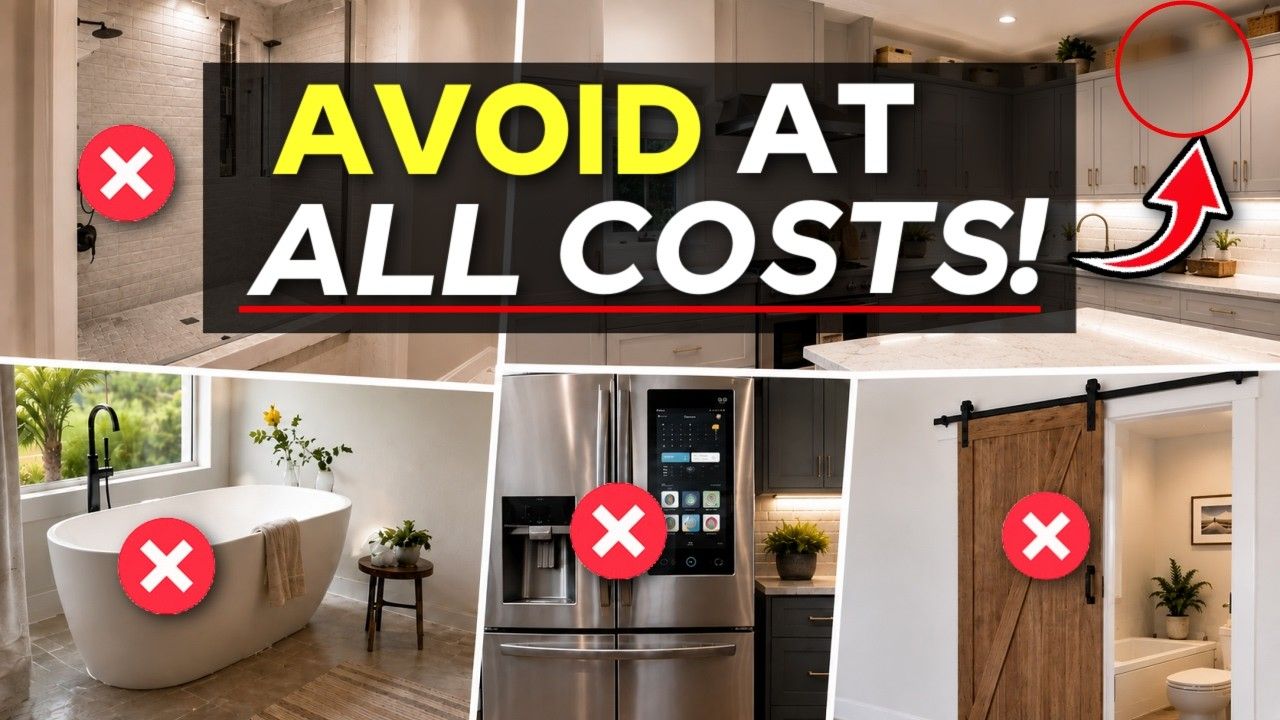
8. Fully Integrated Appliances: Sleek Now, Limiting Later
Fully integrated appliances—refrigerators, dishwashers, and other units concealed behind cabinet panels—create an incredibly sleek, seamless look. Everything blends together. The kitchen feels cohesive and uncluttered.
But this design choice comes with some serious long-term considerations.
When an integrated appliance breaks, replacing it is more complicated and more expensive than swapping out a standard unit. You're locked into specific dimensions and configurations. Technology changes rapidly, and appliances don't last forever.
I can speak to this from personal experience. I have a built-in refrigerator in my own kitchen. It looks fantastic. But when it's time to replace it, I'm looking at a cost of $10,000 to $15,000. Had we installed a standard refrigerator instead, we'd have dozens of options at a fraction of that price.
Because the cabinetry was designed around that specific integrated unit, we're now limited in what we can actually install in that space. What looked clean and minimal years ago now feels limiting.
The Balanced Approach
If you love the integrated look but want more flexibility:
- Consider panel-ready appliances for some items but not all
- Invest in high-quality standard appliances that fit the aesthetic
- Design cabinetry with some flexibility for future replacements
Especially in Orange County's higher-end real estate market, integrated appliances are common and expected in luxury homes. Just make sure you're going into it understanding the long-term cost implications.
9. White Farmhouse Sinks: Charming at First, Challenging Over Time
White farmhouse sinks—also called apron-front sinks—have become incredibly popular over the past decade. They're charming, they photograph beautifully, and they fit perfectly into modern farmhouse and transitional kitchen designs.
The problem is, they show everything.
Over time, white farmhouse sinks show wear, stains, scuffs, and chips. Because sinks are used constantly—arguably more than any other kitchen fixture—that wear becomes noticeable quickly.
Some homeowners don't mind the maintenance. Others get tired of constantly scrubbing to keep it looking clean, especially in households that do a lot of cooking.
This is one of those upgrades where regret usually stems from maintenance expectations, not the appearance itself.
What Holds Up Better
If you love the farmhouse sink style but want something more forgiving:
- Stainless steel apron-front sinks: Classic, durable, and hide wear better
- Dark-colored fireclay or composite sinks: Still offer the farmhouse look but in more forgiving colors
- Standard undermount sinks in durable materials: Less of a statement piece but significantly less upkeep
In busy Orange County kitchens—especially in family homes throughout Huntington Beach and surrounding areas—durability matters. Choose finishes that can handle your lifestyle, not just your aesthetic preferences.
👉 Thinking about remodeling before selling your Orange County home? Let's talk about which upgrades actually move the needle with buyers and which ones are just expensive personal preferences. I'm happy to help you prioritize.
10. Designing Around Trends Instead of Real Life: The Biggest Regret of All
This is the theme that ties everything together: designing a kitchen around trends instead of how you actually live almost always leads to regret.
Trends change. Your daily habits usually don't.
A kitchen that looks amazing but is frustrating to use wears on you over time. You might love how it photographs, but if you're constantly annoyed by impractical choices, that beautiful kitchen becomes a source of stress instead of enjoyment.
The kitchens people are happiest with—both to live in and to sell—are the ones that prioritize function first and style second. They're designed around workflow, storage needs, and lifestyle, with aesthetic choices that enhance rather than compromise those fundamentals.
Questions to Ask Before Any Kitchen Upgrade
Before committing to any expensive or trendy kitchen feature, ask yourself:
- Will I actually use this regularly, or does it just sound cool?
- Am I willing to maintain this for the next 10+ years?
- Does this improve how I work in the kitchen, or just how it looks?
- If I sell in 5-10 years, will buyers see this as a benefit or a quirk?
- Am I choosing this because I love it, or because I've seen it everywhere online?
These questions can save you thousands of dollars and years of frustration.
How Kitchen Upgrades Impact Resale Value in Orange County
Here's something every homeowner should understand: not all kitchen upgrades return equal value when you sell.
Some upgrades are considered essentials by Orange County buyers—updated appliances, functional layouts, quality countertops. Others are personal preferences that may or may not appeal to your eventual buyer.
Before you invest heavily in any kitchen remodel, especially if you're planning to sell within the next few years, talk to a local real estate agent. We can tell you:
- Which upgrades buyers in your specific neighborhood expect
- Which trendy features might actually limit your buyer pool
- Where to allocate your budget for maximum return
- What you can skip entirely without hurting your home's value
This is especially important in Orange County's competitive real estate market. In areas like Huntington Beach, where coastal proximity and lifestyle drive premium prices, buyers have high expectations for kitchen quality—but that doesn't mean they want every trendy upgrade.
Sometimes the smartest choice is a clean, neutral, highly functional kitchen that allows buyers to envision their own style, rather than an over-personalized space that may or may not match their taste.
The Bottom Line: Function Beats Fashion Every Time
None of these kitchen upgrades are automatically bad. Plenty of people genuinely love them and have no regrets. But these are the features I consistently hear homeowners wish they'd reconsidered once the excitement of the remodel wears off.
The pattern is clear: upgrades that prioritize appearance over function, maintenance over livability, or trends over timelessness tend to generate the most regret.
Before you commit to something expensive or highly stylized, think honestly about how you'll live with it day-to-day. Consider your actual cooking habits, your tolerance for maintenance, and whether this feature genuinely improves your kitchen workflow or just looks good in photos.
A kitchen you enjoy using will always be better than a kitchen that just photographs well.
And if you're remodeling with resale in mind—which many Orange County homeowners are—bring in a real estate professional early in the planning process. We can help you prioritize upgrades that buyers actually care about versus expensive personal preferences that won't move the needle when it's time to sell.
Planning a kitchen remodel in Orange County or Huntington Beach? Whether you're preparing to sell or just want to make smart long-term choices, I'm happy to walk through what actually adds value in this market. Let's connect and make sure your investment pays off.
What's your take? Have you regretted any kitchen upgrades, or are you considering one of these features for your own remodel? I'd love to hear your experience—feel free to reach out or leave your thoughts in the comments if you're watching the video.