The 10 Worst Home Upgrades for Resale Value in 2026: What Orange County Homeowners Need to Know
Get The Latest OC Housing Report
The 10 Worst Home Upgrades for Resale Value in 2026: What Orange County Homeowners Need to Know
If you're a homeowner in Orange County or Huntington Beach, you've probably thought about making upgrades to increase your property's value. It's a natural instinct—invest in your home now, reap the rewards later when you sell. But here's the reality: not all home improvements add value. In fact, some of the most popular upgrades can actually hurt your resale value, limit your buyer pool, and create appraisal headaches that cost you thousands.
After more than two decades helping buyers and sellers navigate the Southern California real estate market, I've seen homeowners make the same costly mistakes over and over again. They spend tens of thousands of dollars on renovations they believe are smart investments, only to discover those upgrades either don't return their money or actively work against them when it's time to sell.
This isn't about discouraging you from improving your home. It's about making strategic decisions that protect your equity and position your property competitively in the Orange County housing market. Whether you're planning to sell in the next year or five years from now, understanding which upgrades to avoid can save you significant money and frustration.
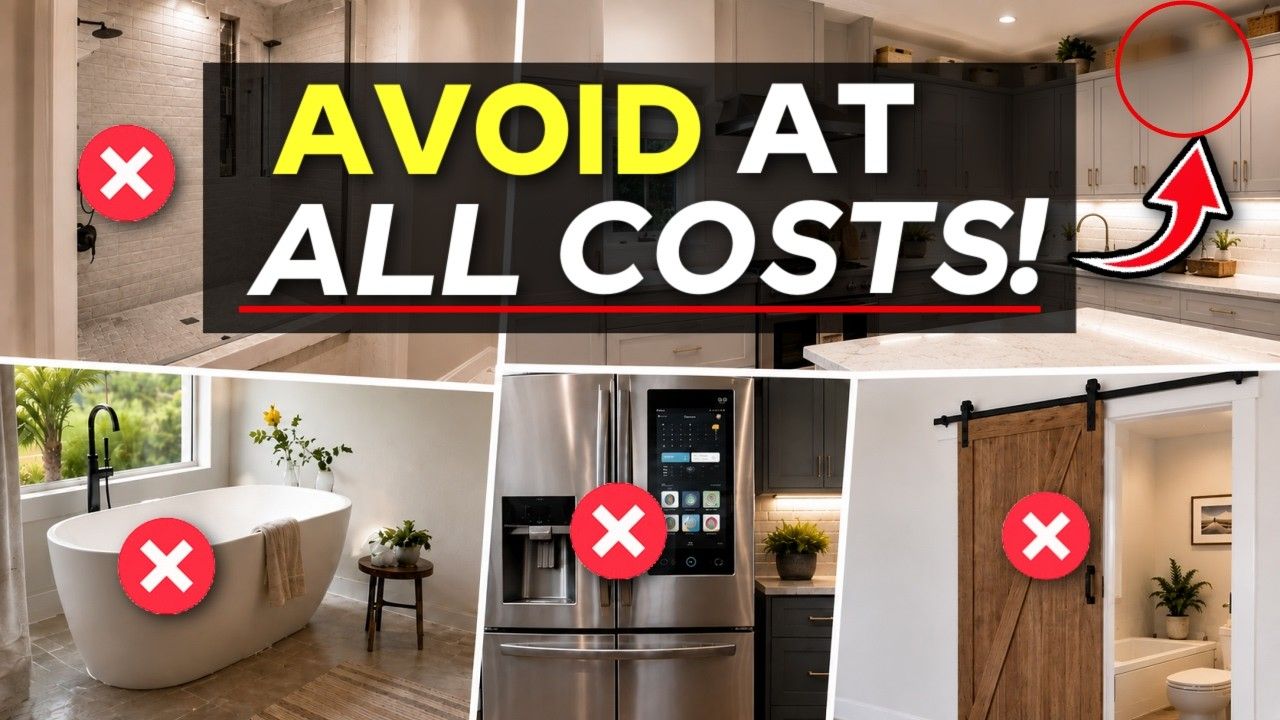
1. Converting a Bedroom Into a Closet
This upgrade seems luxurious on the surface—who wouldn't want a massive walk-in closet with custom cabinetry? But bedroom count is one of the most critical search filters buyers use when shopping for homes in Huntington Beach and throughout Orange County.
I've experienced this issue firsthand. When my family purchased our current home a couple of years ago, we specifically needed a certain bedroom count for our three boys. The previous owners had converted one bedroom into an elaborate, high-end walk-in closet with custom built-ins covering every wall. While it looked impressive, it was completely non-functional for our family's needs.
We had to rip out thousands of dollars worth of perfectly good custom cabinetry just to make the room usable as a bedroom again. That's not adding value—that's creating friction and obstacles for potential buyers.
Here's why this matters in the Orange County real estate market:
Buyers search by bedroom count. When families look for homes online, they filter by the number of bedrooms they need. If your four-bedroom home is now a three-bedroom with a luxury closet, you've immediately removed yourself from searches by anyone looking for four bedrooms.
Appraisers value properties based on bedroom count. Comparable sales in your neighborhood will include bedroom count as a major factor. Reducing your bedroom count can directly impact your home's appraised value.
You've shrunk your buyer pool. Not every buyer values a massive closet over an additional bedroom. Families with multiple children, homeowners who need a home office, or buyers looking for guest accommodations will pass on your property entirely.
Better alternatives: If you want a nicer closet, invest in removable closet systems that don't require eliminating a bedroom. Companies offer high-quality organizational solutions that can be installed without permanently converting the space. This gives you the functionality you want while preserving the bedroom designation that protects your home's value.
2. Removing All the Bathtubs
Walk-in showers with frameless glass, rain heads, and tile from floor to ceiling look stunning in photos and design magazines. There's no question about that. But when you remove every single bathtub from your home, you're not upgrading—you're eliminating functionality that many buyers in Orange County specifically want.
My own home has three full bathrooms, and every single one features a walk-in shower with no tub. While this looked great when we were touring the property, the reality of living without any tubs has been challenging. Between my three boys playing sports, dealing with injuries, sore muscles after long practice days, and recovery needs, we've wished countless times that we had at least one bathtub.
Here's an important point many homeowners miss: bathtubs aren't just for small children. They're for:
- Athletic families who need to soak sore muscles
- Anyone recovering from injuries or surgery
- Stress relief and relaxation after long work days
- Older adults who may have mobility considerations
- Resale value to families with young children or pets
When you remove all bathtubs from a home in Huntington Beach or anywhere in Orange County, you're making a statement about how the home should be used. For many buyer demographics—especially families, which represent a significant portion of the Southern California market—this can be a dealbreaker.
The smart approach: You don't need bathtubs in every bathroom. But you should absolutely maintain at least one tub somewhere in the home, ideally in a main or secondary bathroom. This preserves functionality and appeal to the broadest possible buyer pool without sacrificing the modern shower upgrades you want.
3. Garage Conversions
Converting your garage into a home gym, entertainment room, or bonus living space might sound like a creative way to add square footage, but it's one of the worst upgrades you can make from a resale perspective in the Orange County housing market.
Buyers want garages. This is especially true in Southern California, where:
- Parking is at a premium
- Many neighborhoods have limited street parking
- Vehicle protection from sun exposure matters year-round
- Storage needs are significant
- HOA regulations often require garage use for vehicles
Even if your garage conversion is beautifully finished, there are serious problems:
Permitting issues create liability. Unless the conversion was fully permitted with proper inspections, insulation, HVAC installation, and egress requirements, it likely won't count as legitimate living square footage. This creates disclosure requirements and can complicate financing for buyers.
Appraisal challenges reduce value. Appraisers may not give you credit for the converted space if it wasn't properly permitted or doesn't meet code requirements. You've spent money to create space that doesn't increase your home's official value.
You've eliminated a major selling feature. In competitive Orange County neighborhoods, garage space is a significant amenity. Two-car garages are expected; three-car garages are highly desirable. When you convert that space, you're removing something buyers actively search for and expect.
The return is minimal. Even in best-case scenarios with proper permits, garage conversions typically return only a fraction of their cost. You're making a large investment for very little financial gain.
If you need additional living space, consider other options like finishing an attic, adding an ADU (Accessory Dwelling Unit) where permitted, or reconfiguring existing interior space. These approaches can add functional square footage without sacrificing the garage that buyers in Huntington Beach and Orange County expect.
4. Overspending on the Primary Suite
Luxury primary suite renovations are everywhere on home improvement shows and social media. Spa-like bathrooms with freestanding tubs, massive walk-in showers, heated floors, custom tile work, and boutique hotel finishes look incredible. But there's a critical concept in real estate valuation that many homeowners ignore: you cannot significantly exceed your neighborhood's value ceiling.
If you invest $75,000 to $100,000 creating an ultra-luxury primary suite in a neighborhood where homes sell for $800,000 to $900,000, you've overimproved the property. The market will not reward you for having the nicest home on the block. Instead, appraisers and buyers will pull your value back toward the neighborhood average.
This is particularly relevant in Orange County, where neighborhood values can vary dramatically even within the same city. A $75,000 primary suite renovation might make perfect sense in certain Huntington Beach coastal neighborhoods where homes routinely sell for $2 million or more. That same investment would be a terrible financial decision in neighborhoods where the median home price is significantly lower.
Understanding overimprovement:
The principle is simple: your home's value is largely determined by comparable sales in your immediate area. If surrounding homes are selling for $850,000 and your renovations push your expected price to $1.1 million, buyers will simply purchase a home in a better neighborhood for that price point rather than overpaying in yours.
What works instead:
Focus on cosmetic upgrades that deliver high impact at lower cost:
- Fresh paint in current, neutral colors
- Updated light fixtures and hardware
- Modern bathroom fixtures and vanities
- Quality flooring that matches the neighborhood standard
- Upgraded closet systems
- Better mirrors and storage solutions
These improvements make your primary suite feel updated and competitive without overinvesting in finishes that exceed what the neighborhood supports.
The goal isn't to have the least expensive home on the block—it's to be competitively updated within the context of your specific Orange County neighborhood's price range and buyer expectations.
5. Solar Panels (With Leases or Loans)
Solar energy makes sense from an environmental perspective, and for some homeowners, it makes financial sense for long-term ownership. But when it comes to resale value in the Southern California real estate market, solar panels are far more complicated than most homeowners realize.
I work with this issue constantly when representing both buyers and sellers in Orange County and Huntington Beach. The reality is that unless you own your solar system outright—meaning it's completely paid off with no lease or loan attached—most buyers view solar as a complication rather than a benefit.
Why solar creates problems at resale:
Leased solar is a major obstacle. When solar panels are leased, the buyer must qualify for and assume the lease agreement. This adds another layer of underwriting, another monthly payment to consider, and another obligation that many buyers simply don't want. I've seen buyers walk away from homes entirely once they understood the lease terms, monthly costs, and long-term commitment involved.
Financed solar creates payment concerns. Even if the solar system is financed rather than leased, buyers must either assume the loan (which requires qualification and adds to their debt-to-income ratio) or you must pay it off at closing. Either scenario creates friction in the transaction.
The value perception is mismatched. Sellers often believe solar should add significant value to their home because of the installation cost and energy savings. Buyers, however, focus on their total monthly payment—mortgage, property taxes, insurance, HOA fees, and utilities. An additional solar payment often increases their total monthly obligation, which works against affordability.
Appraisal challenges exist. Appraisers struggle to assign consistent value to solar systems because the financial arrangements vary so widely. Owned systems may add some value; leased or financed systems typically add little to none.
The buyer perspective:
After working with hundreds of buyers in the Orange County market, I can tell you that most don't prioritize solar. They care about:
- Total monthly housing payment
- Home condition and layout
- Location and school districts
- Move-in readiness
Energy savings from solar are often theoretical to buyers, while the monthly lease or loan payment is very real and immediate.
When solar makes sense:
Install solar because it benefits your long-term ownership, reduces your personal energy costs, and aligns with your environmental values—not because you expect it to boost your resale value dollar-for-dollar. If you do install solar and plan to sell within a few years, be prepared to either pay off the system completely or market to a very specific subset of buyers who value and understand solar agreements.
6. High-End Appliances That Don't Fit the Neighborhood
Walking through homes with buyers in Huntington Beach and throughout Orange County, I regularly see the same pattern: homeowners have invested $25,000, $40,000, or even $50,000 or more in top-of-the-line appliance packages—Sub-Zero refrigerators, Wolf or Viking ranges, Miele dishwashers, designer wine refrigerators—in neighborhoods where the surrounding homes don't support that level of finish.
The appliances aren't the problem. The mismatch between the appliances and the neighborhood is the problem.
Why appliance overinvestment doesn't pay off:
Buyers expect consistency. When buyers tour a home in a $1.2 million Orange County neighborhood, they have certain expectations about finishes, flooring, countertops, cabinetry, and yes, appliances. If the home has $50,000 in appliances but builder-grade everything else, the inconsistency raises questions rather than adding appeal.
Neighborhoods have value ceilings. Just like primary suite overimprovements, appliance packages that exceed neighborhood standards won't generate returns. Buyers shopping in specific Orange County neighborhoods have budget ranges. They're not going to overpay for your home just because you wanted restaurant-quality appliances.
Personal preference doesn't equal market value. If you're a chef or cooking enthusiast who genuinely uses and appreciates high-end appliances, that's fantastic—enjoy them. But understand that your personal passion doesn't translate into market demand. The next buyer may not cook at all and would rather have that money reflected in a lower purchase price.
What buyers actually want:
In most Orange County neighborhoods, clean, matching stainless steel appliances from reputable brands (GE, Samsung, LG, Bosch, KitchenAid) check every box for the majority of buyers. They look modern, they function well, and they meet expectations without overinvestment.
Better uses for your renovation budget:
Instead of spending $30,000 to $50,000 on designer appliances, consider putting that money toward systems and infrastructure that buyers worry about but don't want to deal with after moving in:
Electrical panel upgrades: If your home still has an older, undersized panel (common in many Orange County homes built before the 2000s), upgrading to a modern 200-amp panel removes buyer concerns about capacity for modern living—electric vehicles, multiple HVAC zones, home offices, and high-power appliances.
Plumbing updates: Old galvanized pipes, aging copper supply lines, cast iron sewer lines, or polybutylene plumbing are red flags for buyers. These issues are expensive to fix and highly disruptive. Addressing them proactively removes fear and negotiation leverage from buyers.
HVAC system replacement: No buyer wants to move into a home knowing the furnace or air conditioning system is 20+ years old and could fail during their first summer or winter. A newer, efficient HVAC system provides peace of mind and removes a major objection.
Roof replacement: If your roof is approaching the end of its expected lifespan (typically 20-25 years for composition shingles in Southern California), buyers immediately start calculating replacement costs—often $15,000 to $30,000+ depending on the home's size. A newer roof removes this concern entirely and makes your home significantly easier for buyers to say yes to.
These aren't sexy, Instagram-worthy upgrades. But they absolutely influence buyer confidence and willingness to pay your asking price. Most buyers don't fantasize about designer appliances—they want to avoid a $20,000 surprise expense right after closing.
7. Built-In Smart Home Systems
Hardwired, proprietary smart home technology sounds impressive and futuristic, but it ages incredibly fast. What feels cutting-edge today often becomes outdated, unsupported, or incompatible within just a few years.
I've toured homes in Orange County where sellers invested heavily in custom automation systems—integrated lighting, motorized shades, whole-home audio, security systems, climate control—all controlled through proprietary panels or apps that are now obsolete or no longer supported by the manufacturer.
Why built-in smart home systems create problems:
Technology evolves too quickly. The smart home industry changes rapidly. Systems that were state-of-the-art five years ago may now be incompatible with current devices, apps, or platforms. Buyers worry about being locked into outdated technology or facing expensive upgrades just to maintain basic functionality.
Complexity scares buyers. Most buyers want simplicity and ease of use. When they see complex control panels, multiple apps, or systems that require professional programming or service, they worry about maintenance costs and troubleshooting headaches.
Proprietary systems create dependency. If the system relies on a specific company or platform that goes out of business, gets acquired, or discontinues support, the entire investment becomes worthless. This has happened repeatedly in the smart home industry.
The smart approach to home technology:
Stick to plug-and-play, widely-compatible smart home devices that can be easily upgraded or removed:
- Smart thermostats(Nest, Ecobee) that work with standard HVAC systems
- Standalone security cameras(Ring, Arlo) that don't require hardwiring
- Smart lighting using standard bulbs or switches
- Video doorbells that can be installed without major modifications
- Smart locks that replace standard deadbolts
These solutions provide modern convenience without permanent infrastructure that could become obsolete or create complications at resale.
Buyers in Huntington Beach and Orange County appreciate homes with modern conveniences, but they strongly prefer systems they can understand, control, and upgrade on their own terms.
8. Niche Hobby Rooms
Custom home theaters with tiered seating and acoustic panels, dedicated home gyms with rubberized flooring and mirrored walls, elaborate craft rooms with built-in storage—these spaces look incredible when they match your specific interests. But they can significantly limit your buyer pool when it's time to sell.
The problem isn't the idea of these spaces. The problem is permanent, highly-specific buildouts that prevent the room from being easily repurposed.
Why niche customization reduces appeal:
Buyers want flexibility. When someone tours your home, they're mentally placing their furniture, imagining their lifestyle, and considering how they'd use each space. When a room is so specifically designed for one narrow purpose, it's difficult for buyers to envision alternative uses.
You've narrowed your audience. A home theater might appeal to movie enthusiasts, but many buyers would prefer that space as an additional bedroom, home office, playroom, or multi-purpose family room. When you've made the conversion permanent with built-in seating, specialized lighting, acoustic treatments, and custom floors, you've made it difficult and expensive for the next owner to change.
The investment rarely returns. The cost to create these specialized spaces is significant, but the added value at resale is minimal. Most buyers won't pay extra for your personal hobby space, and some will see it as a negative because they'll need to undo the work.
What works instead:
You can absolutely create spaces for your hobbies and interests—just do it in ways that aren't permanent:
- Home theaters: A quality projector, sound system, and blackout curtains create an excellent viewing experience without permanent structural changes. The next owner can easily convert the room back to a bedroom or office.
- Home gyms: Portable gym equipment, rubber mats that can be removed, and freestanding mirrors provide full functionality without permanent modifications.
- Craft rooms: Modular storage systems, mobile work surfaces, and removable organizational solutions let you create dedicated space without limiting future use.
The goal is to enjoy your home while you live there without making choices that will cost you money or limit your options when you sell in the Orange County market.
9. Swimming Pools
This one surprises many Southern California homeowners because pools seem synonymous with the lifestyle here. But from a pure financial perspective, swimming pools are one of the most overrated home upgrades for resale value.
The pool reality in Orange County real estate:
Installation costs are high. Depending on size, features, and site conditions, installing an in-ground pool in Orange County typically costs $60,000 to $150,000 or more. That's a substantial investment.
Return on investment is low. Industry data consistently shows that pools return only about 30-40% of their installation cost at resale. Your $100,000 pool might add $30,000 to $40,000 to your home's value—if it adds anything at all.
Pools divide buyers. For every buyer who loves the idea of a pool, there's another who sees it as a liability. I'm currently working with multiple buyers in Huntington Beach who specifically exclude any home with a pool from their search because of:
- Ongoing maintenance costs and time commitment
- Increased homeowner's insurance premiums
- Safety concerns with young children
- Liability worries
- Reduced usable yard space
Neighborhood context matters. In certain high-end coastal Orange County neighborhoods where pools are standard and expected, not having a pool might actually hurt your value. But in many other areas, a pool is neutral at best and negative at worst from a resale perspective.
Maintenance is a disclosed reality. Unlike some home features, pool condition and maintenance history must be disclosed to buyers. If your pool has issues—aging equipment, surface problems, leaks, outdated systems—buyers will either negotiate hard or walk away entirely.
The smart approach to pools:
If you want a pool because it genuinely fits your lifestyle, you'll use it regularly, and you plan to own the home long enough to enjoy it, then install one for those reasons. Don't install a pool as an investment strategy or because you think it will significantly boost your resale value in the Orange County market—it almost certainly won't.
If you're buying a home that already has a pool, budget for ongoing maintenance and eventual equipment replacement. If you're selling a home with a pool, make sure it's in excellent condition before listing. A sparkling, well-maintained pool can be an amenity; a neglected pool is a red flag that will cost you in negotiations.
10. Open Shelving in Kitchens
Open shelving trends heavily on Instagram and Pinterest. It looks clean, modern, and minimalist in professional photos. But in real-world daily use, open shelving in kitchens is one of the most impractical trends that continues to frustrate homeowners and turn off buyers.
I know this opinion will frustrate some people who love the aesthetic, but the practical reality matters more than the Instagram photo.
Why open shelving doesn't work long-term:
Everything shows. Dust accumulates on dishes, glassware, and the shelves themselves. Cooking grease—which is present in every kitchen—settles on exposed items. You're constantly cleaning not just the shelves but everything on them.
Visual clutter is unavoidable. Unless you're willing to maintain a museum-level of organization at all times, open shelving displays the normal chaos of daily life. Mismatched dishes, everyday items, and practical storage needs don't photograph well and create visual noise that most people find stressful.
You've reduced functional storage. Cabinets hide the mess and provide significantly more usable storage than open shelves. When you remove upper cabinets in favor of open shelving, you've reduced your kitchen's functionality for the sake of a trend that most buyers don't want to maintain.
Buyer perspective is clear. After showing hundreds of homes in Orange County, I can tell you that buyers consistently prefer enclosed cabinet storage in kitchens. They want to hide the everyday clutter, store items without worrying about display-worthy organization, and avoid the constant maintenance that open shelving requires.
The balanced approach:
If you love the look of open shelving, keep one small accent shelf or a single section for display. Use it to showcase a few nice pieces, but don't remove all of your upper cabinets. This gives you the aesthetic element you want while maintaining the functional storage that protects your home's value and broad market appeal.
Kitchen functionality matters enormously to buyers in Huntington Beach and throughout Orange County. When you sacrifice practical storage for trendy aesthetics, you're making a choice that will likely cost you when it's time to sell.
The Bigger Picture: How Buyers Actually Shop
Understanding why these upgrades hurt your resale value comes down to understanding how buyers shop for homes in today's market.
Buyers use filters. When someone searches for homes in Orange County on Zillow, Redfin, or Realtor.com, they filter by:
- Price range
- Bedroom count
- Bathroom count
- Square footage
- Garage spaces
- Lot size
If your renovations have reduced bedroom count, eliminated garage space, or created other functional limitations, you've removed yourself from buyer searches before they even see your property.
Buyers shop mentally. Even when touring homes in person, buyers are mentally filtering based on their needs and concerns:
- "We need four bedrooms for the kids"
- "We need garage space for two cars plus storage"
- "We don't want to deal with pool maintenance"
- "I don't want an open kitchen shelf I have to constantly dust"
When your upgrades conflict with common buyer needs, you've created mental objections that work against you in negotiations.
Buyers compare to other options. Your home isn't evaluated in isolation. It's compared to every other available property in your price range and neighborhood. If comparable homes offer more bedrooms, functional garages, standard features, and fewer complications, buyers will choose those properties over yours—even if your finishes look nicer in photos.
Final Thoughts: Protecting Your Investment in the Orange County Market
The goal of this breakdown isn't to discourage you from improving your home. It's to help you make strategic decisions that protect and enhance your property's value rather than inadvertently hurting it.
Smart renovations in Orange County focus on:
- Maintaining functionality that appeals to the broadest buyer pool
- Updating within your neighborhood's standards rather than dramatically exceeding them
- Addressing deferred maintenance and systems that buyers worry about
- Cosmetic improvements that deliver high impact at reasonable cost
- Flexibility rather than permanent, niche customizations
When you're planning upgrades, always ask yourself: "Will this renovation expand my potential buyer pool or shrink it? Will the market reward this investment, or am I doing this purely for personal enjoyment?"
Both answers can be valid—just be honest with yourself about which category your planned upgrade falls into.
The Orange County and Huntington Beach real estate markets are competitive and sophisticated. Buyers have options, and they're making calculated decisions about value, functionality, and long-term costs. Your renovation strategy should account for these realities rather than fighting against them.