What Sellers Are Getting Wrong in the 2026 Housing Market
Here's something I want sellers to sit with for a moment: the biggest reason homes struggle to sell in 2026 has nothing to do with interest rates. It's not buyers. It's not the economy. It's not even inventory levels. It's expectations.
After more than 20 years of listing homes across Orange County and Huntington Beach, I keep walking into listing appointments and having the same pattern of conversations with sellers who are operating with a 2021 mindset in a 2026 market. They believe they can list first, figure the rest out later, and let the market do the heavy lifting. That worked three years ago. It does not work today.
The difference between a home that sells immediately and one that sits, reduces, and eventually settles well below where it should have? It almost always comes down to a few key conversations — conversations that either don't happen at all or that sellers actively avoid. Let me walk through some real examples from recent listing appointments, because these stories reveal exactly what's happening right now in the Southern California housing market.
The "List It and See" Mindset Is Costing Sellers Real Money
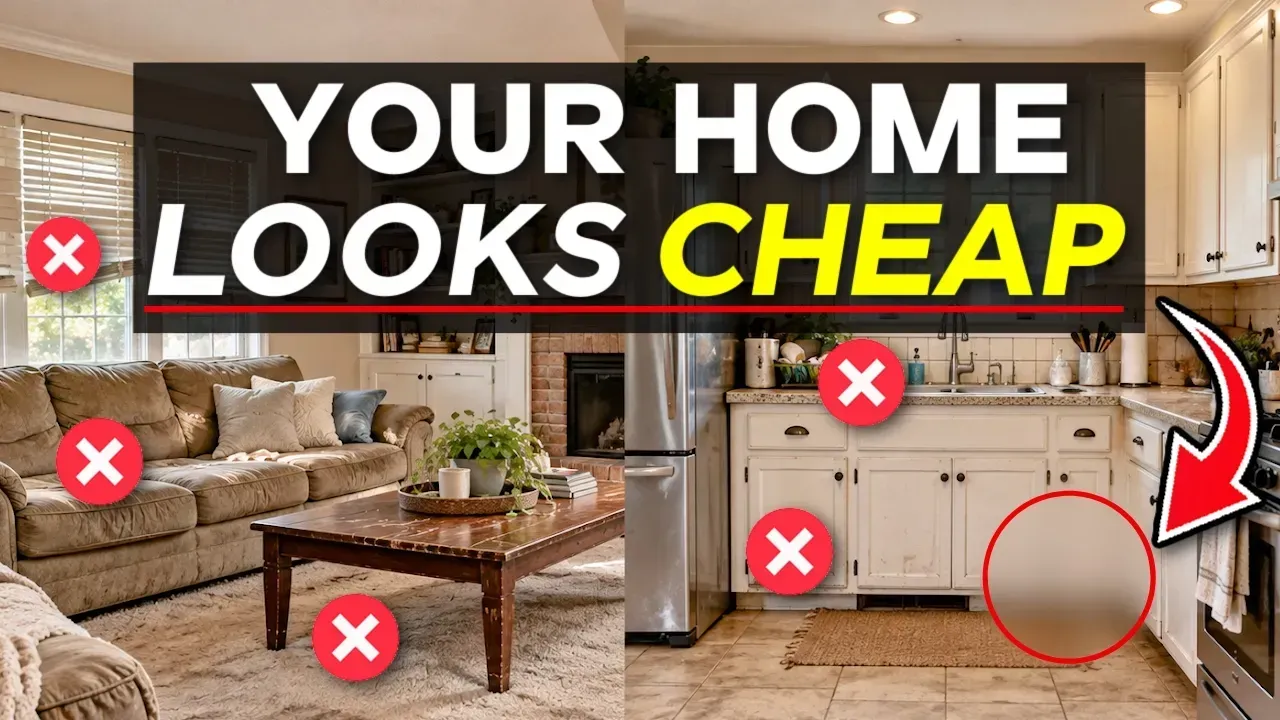
Last week I was on a listing appointment for a home with vinyl plank flooring throughout the entire main living area. From the moment you walked through the door, the damage was impossible to ignore — scratches, wear and tear, buckling in spots, gaps along the edges. It clearly needed attention before the home went on the market.
I told the seller the floors needed to be addressed before listing. The response? "Why don't we just list it and see if someone really likes it and then we can deal with that later."
That mindset right there is one of the biggest reasons homes struggle to sell in today's market.
Here's what sellers often miss: the decision isn't between fixing the floors now or offering a credit later. The real decision is how many buyers take your home seriously in the first place. You might find one buyer willing to overlook damaged floors — but if the floors were fixed, you could attract several buyers competing at the same time. And that competition is what protects your price. Without it, you're negotiating from weakness instead of strength.
Buyers don't walk into a home, notice obvious problems, and think, "I'll just sort that out after closing." What they think is: "If this is what I can see, what am I not seeing?" And most of them move on without ever making an offer. Not because they couldn't handle the repair — but because uncertainty had already set in.
When Buyers Can't Quantify a Risk, They Assume the Worst
On that same home, there was a second issue brewing in the background. The roof was aluminum — something I've genuinely never seen in over 20 years of listing homes here in Southern California. It had visible dents across the surface, and while it had been painted black to minimize the appearance, it was still very noticeable — especially from the upstairs bedrooms where you could look directly out onto it.
The seller felt it wasn't a significant enough issue to worry about. I understood where they were coming from, but I've seen this play out too many times to stay quiet about it.
Here's what actually happens in real life: a buyer notices it. They ask their agent. The agent raises the concern with an inspector or a lender. Suddenly, everyone involved is uneasy — and nobody can easily put a number on the risk. That's the problem. When buyers can't quantify an issue, they don't negotiate thoughtfully. They either go dramatically low or they walk away entirely.
Buyers don't need proof that something is wrong for it to affect their offer. They just need uncertainty. And in this market, uncertainty kills deals.
It's also worth noting that this same property had already been listed before and didn't sell. The seller wanted to relist at top dollar with the backup plan of reducing the price if it didn't move. That reasoning is costing sellers real money right now across Orange County and beyond.
Why Overpricing Doesn't Buy You Time — It Costs You Buyers
There's a belief that pricing a home on the higher end gives you room to negotiate — that motivated buyers will circle back once you come down. The market doesn't work that way anymore, and it really hasn't for some time.
When a home hits the market overpriced, buyers don't bookmark it and wait. They dismiss it. The most motivated buyers — the ones who would have moved quickly and competed for your home — have already bought something else by the time you reduce. What's left is a home that now feels stale. Buyers start wondering why it didn't sell. Every offer that comes in starts lower than it should, because your negotiating position has eroded with every day on market.
Pricing isn't about hope. It's about strategy. It's about understanding where comparable sales actually land and positioning the home to generate the kind of early momentum that drives competition and protects price. That's a different conversation than what most sellers want to have — but it's the honest one.
The Problem with "We'll Figure It Out Under Contract"
I had a separate conversation with a potential seller who was thinking about listing a home with leased solar panels. The solar itself wasn't the problem. The problem was that the seller had almost no information about the lease — they didn't know how much time was left, whether it was transferable, what the monthly payment actually was, or what happened if the new buyer wanted to remove the system entirely.
The seller's plan? List the home and figure it out once they were under contract.
That's completely backwards, and I'll tell you why it matters so much in today's market specifically. Buyers want to know exactly what they're walking into before they commit — especially when something directly affects their monthly payment. No buyer wants to get under contract, spend money on inspections and an appraisal, and then discover mid-transaction that they're also inheriting a solar lease with 11 years left on it and a $180 monthly payment that doesn't transfer cleanly.
Surprises after commitment don't create goodwill. They create doubt. And doubt at that stage of the transaction almost always costs the seller — either through renegotiation, a price reduction, or a deal that falls apart entirely.
Transparency builds confidence. Uncertainty kills deals. That's not just a philosophy — it's the mechanics of how real estate transactions either hold together or fall apart.
If you're thinking about selling in Orange County or Huntington Beach and you want an honest assessment of what your home needs before it goes on the market, I'm happy to walk through it with you.
Let's Talk Strategy →What These Situations All Have in Common
The sellers in each of these situations weren't bad people. None of the issues they were dealing with were truly fatal to a sale. The problem wasn't the floors or the roof or the solar lease. The problem was the mindset.
Problems were deferred to later. Pricing was based on hope instead of data. Details were treated as optional extras rather than deal-shaping factors. That approach might have worked when buyer demand was so overwhelming that homes sold themselves regardless of condition or preparation. That was 2021. This is 2026, and the market is asking sellers to show up differently.
Buyers today — especially in Huntington Beach and throughout Orange County — want clarity. They want fewer unknowns. They want to feel confident saying yes. Homes sell not because they're perfect, but because buyers feel safe moving forward. Your job as a seller, and your agent's job, is to reduce friction and maximize confidence at every stage of the process.
The Truth About What "Selling at Top Dollar" Actually Requires
Here's something every seller in the current market needs to understand: every home is going to sell at some price. That's not the challenge. The real goal is selling for top dollar, in the shortest amount of time, with the least amount of stress. And getting there requires more than just prepping the home and listing it.
It requires preparation that's honest about condition. It requires pricing that's grounded in comparable sales, not in what the seller hopes the home is worth. And it requires an agent willing to have the difficult conversations before the home hits the market — not after leverage has already been lost.
Most sellers don't actually want those hard conversations. They want agreement. They want reassurance. They want an agent who nods along and says yes to everything. I understand that impulse. Selling a home is stressful, and it's natural to want validation. But an agent who agrees with everything you say isn't protecting you. An agent who gives you no feedback isn't adding value — they're just making you comfortable in the short term while setting you up for a harder outcome later.
The tough conversations that don't happen before listing will happen anyway once you've lost leverage. They'll just happen on the buyer's terms instead of yours.
What to Look for in a Listing Agent Right Now
The 2026 real estate market across Southern California is rewarding sellers who prepare intentionally and penalizing those who wing it. Given that, the question of who represents you matters more than it has in years.
The right agent for this market isn't necessarily the one who promises the highest list price. It's the one who can walk you through the comparable sales honestly, identify what needs to be addressed before you list, and help you price in a way that generates real competition — not just attention. It's the one willing to tell you things you might not want to hear, because that honesty is what protects your bottom line.
When I didn't get that listing I described earlier — the one with the vinyl plank floors and the aluminum roof — the seller went with an agent willing to list for 1%. Every agent gets to decide their own worth. But that home didn't need someone to agree with the seller and put a lockbox on the door. It needed strategy. It needed honest conversations up front. And without those, the market will eventually deliver the same feedback — just more painfully, and at a greater cost.
What Buyers Are Experiencing in Today's Orange County Market
To be clear, this isn't a one-sided issue. I've also been on the buyer side of deals recently that reinforce exactly why seller preparation matters so much right now.
I was recently representing buyers who loved a home, but the price didn't line up with comparable sales in the area. I reached out to the listing agent to see if there was something I was missing — something that justified the number. His response was that he couldn't justify the price per square foot, but felt the home was unique enough that comps didn't fully apply.
Here's the reality: buyers don't care about price per square foot. Appraisers don't care about price per square foot. And lenders certainly don't care about price per square foot. What they care about is comparable sales — actual closed transactions that support the number on the listing. When pricing feels explained rather than proven, buyers hesitate. And hesitation is often enough to kill a deal before it ever gains momentum.
Unique homes can and do command premiums in the right circumstances. But those premiums have to be justified by something buyers and appraisers can actually point to — not just the seller's belief in what their home is worth.
If You're Thinking About Selling in Huntington Beach or Orange County
The conversations I've shared here are happening in real listing appointments right now — not hypotheticals, not market theory. This is what's actually playing out across the Huntington Beach and Orange County real estate market in 2026.
Sellers who understand this and prepare accordingly are the ones who sell quickly, at strong prices, with clean transactions. Sellers who don't are the ones chasing the market with price reductions, watching motivated buyers disappear, and ultimately settling for less than they should have gotten.
The good news is that none of this is complicated. It just requires honesty, preparation, and a willingness to have the right conversations before the home goes live — not after.
I work directly with sellers in my market, and if you're outside of my area, I can refer you to an agent who operates the same way I do: someone who prepares intentionally, prices based on data, and isn't afraid to give you the honest feedback you need to win in this market.
If you're planning to sell in Huntington Beach, Orange County, or anywhere in Southern California and want to talk through your situation before making any decisions, reach out. Getting the right advice before you list can be the difference between selling quickly at top dollar and chasing the market after the fact.
Contact Jeb Smith →So let me leave you with the same question I ask every seller I sit down with: do you want an agent who agrees with you, or one who actually protects you?
Those are two very different things. And in this market, the answer matters more than ever.
Jeb Smith is a licensed real estate agent based in Huntington Beach, CA, with over 20 years of experience serving buyers and sellers across Orange County and Southern California. He specializes in helping clients make strategic real estate decisions in any market condition.