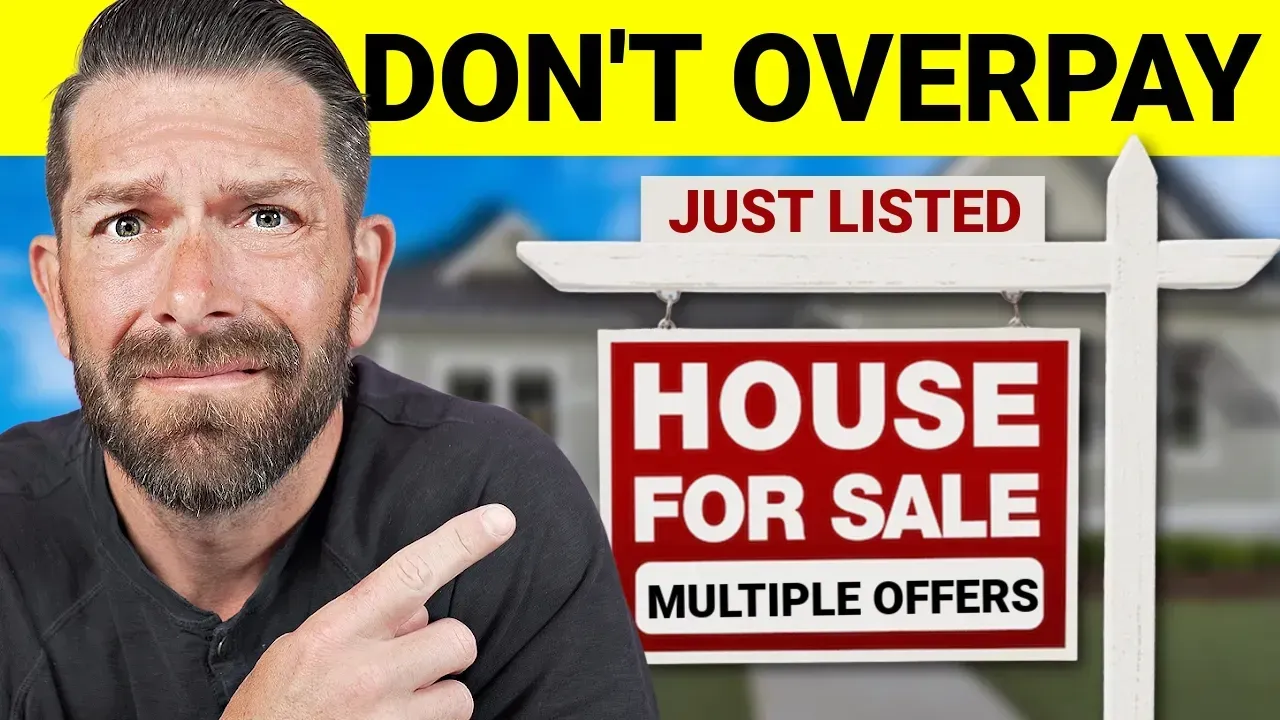
5 Types of Homes Buyers Are Competing For Right Now
Some homes sell in a matter of days while others sit for months, and that has very little to do with whether the broader market favors buyers or sellers. Buyers have become incredibly selective. They'll compete aggressively for the right home while completely ignoring another one a few doors down. So what makes one home attract multiple offers while another struggles to get people through the front door, and what can you learn from those successful listings before you put a for sale sign in your yard? Here are the five types of homes buyers are consistently fighting over, and what every seller can learn from each one to sell faster and attract stronger offers.
After more than 20 years in real estate, I can tell you the sellers getting the best results aren't always the ones with the nicest homes. They're the ones who understand how buyers think.
1. The Home Priced Just Below Market Value
One of the biggest mistakes I see sellers make is believing their list price determines what their home will sell for. It doesn't. The list price is a marketing tool, and used correctly, it creates urgency, generates more showings, and can drive the final sales price higher. A home that comes on the market priced just below where buyers expect it to be gets an immediate reaction: buyers feel like they found a great opportunity, showings pick up, open houses fill up, offers start coming in, and buyers end up competing against each other instead of negotiating against the seller. That's exactly what you want.
That doesn't mean every seller should intentionally price below market. This strategy only works when the home is desirable enough to create competition. If the condition or location isn't there, or buyers simply don't see enough value, pricing below market can cost you money instead. And here's a mistake I see constantly: a seller says, let's start high, we can always come down. The problem is your home gets the most attention in the first couple of weeks, when every serious buyer is watching. Price too high during that window and many buyers won't even schedule a showing. Weeks later, after several price reductions, buyers start wondering what's wrong with the property. You only get one chance to make a first impression. The goal isn't the highest list price, it's the strongest demand, because buyers negotiate against other buyers, not against your asking price, and that competition is what produces the best offers and terms.
2. The True Fixer-Upper
When I say fixer-upper, I don't mean a home that needs fresh paint or new flooring. I mean homes that need major work: an outdated kitchen, aging bathrooms, a roof at the end of its life, old plumbing or electrical, or years of deferred maintenance. If you're a seller looking at a home like that, you might assume nobody wants it. There are plenty of buyers actively looking for exactly that. Investors love these properties because they're looking at potential rather than current condition, and they know the right improvements can create value. There are also buyers who've been priced out of turnkey homes and are willing to put in sweat equity to get into a neighborhood they love.
Here's where I see sellers make one of the biggest mistakes: they assume they have to renovate everything before listing, so they spend months living through construction and writing checks, believing that's the only way to maximize their price. Sometimes that's the right strategy. Often it isn't. I've worked with sellers who spent $50,000 to $70,000 updating a home only to discover they never came close to recovering that investment, because they improved the house based on what they wanted instead of what buyers were actually willing to pay for. Sometimes buyers would rather buy at a lower price and make those decisions themselves, and investors often don't want your updates because they're planning to remove everything anyway. Before spending a dollar on renovations, figure out who your likely buyer is. If your home is going to appeal to investors, leaning into the opportunity and selling as-is can put more money in your pocket than trying to make it look like something it isn't.
3. The Turnkey, Move-In-Ready Home
These are the homes buyers walk into and immediately react to: everything updated, current paint colors, a kitchen that looks the part, modern bathrooms, clean landscaping. Buyers can picture moving in without changing a thing, and with mortgage rates and affordability already stretching many buyers' budgets, the last thing they want is to close and immediately spend $50,000 replacing flooring or remodeling a kitchen. That's why these homes consistently attract strong interest.
But being updated doesn't mean you can name your own price. I see this constantly: a seller remodels and assumes every dollar invested automatically increases the home's value. Buyers don't see it that way. They're still comparing your home to everything else on the market, and if it's priced significantly higher than similar properties, buyers may love it and still not buy it. The turnkey homes that sell fastest aren't just beautiful, they're priced so buyers feel like they're getting something special for the money. You also don't need a full remodel to create that move-in-ready feeling. Fresh paint, clean carpets, updated lighting, professional staging, and good photography can change how buyers perceive a home. I've seen relatively modest homes generate more interest than larger, pricier ones simply because they were presented better. Buyers aren't just purchasing square footage, they're buying confidence that they can start living there right away.
4. Great Location, Good Bones
This is one of the most misunderstood categories, and I love it because sellers so often undersell themselves here. I can't tell you how many times I've walked into a home where the seller starts apologizing: sorry the kitchen hasn't been updated, sorry about the bathrooms, we never got around to the flooring. Meanwhile they're overlooking what actually makes the home valuable, whether that's a great neighborhood, a larger lot than anything built today, mature trees, real privacy, or a floor plan that simply works. Those are things buyers can't renovate into a home. Plenty of buyers would rather buy in a neighborhood they love and update it slowly over time than buy a fully remodeled home somewhere they don't want to live, because finishes can change and locations can't.
If your home falls into this category, your marketing should focus on what buyers can never replace: the neighborhood, nearby restaurants, parks, walking trails, and everything that makes living there worthwhile, then frame the home as an opportunity to personalize over time. That's a stronger message than trying to convince buyers an outdated kitchen isn't outdated. Buyers today also do far more research before ever scheduling a showing, so if they're booking an appointment, they've likely already decided they like the location. Your job at that point is helping them see the long-term value the home offers, since the homes with the greatest appreciation potential aren't always the prettiest, they're simply in the right place.
5. Flexible Floor Plans
The fifth category is homes with a downstairs primary bedroom or a floor plan that offers flexible living, and it's become a much bigger selling point over recent years. Buyers aren't just asking whether a home works today, they're asking whether it'll still work years from now, whether that means planning for aging parents, their own future, adult children who may move back for a period, or simply wanting a downstairs room for guests. Buyers are placing real value on homes that can adapt as life changes.
If your home has one of these features, don't bury it halfway down the listing description, lead with it. The same goes for guest suites, detached ADUs, bonus rooms, home offices, or other flexible spaces, since these aren't just extra rooms anymore, they're solutions buyers are actively shopping for. Buyers don't just purchase features, they purchase lifestyles: holiday dinners with family, grandparents staying over, working from home without taking over the dining table. Once a buyer emotionally connects with a home that fits their life, the conversation becomes less about square footage and much more about value, which is exactly where you want it.
What Ties These Together
Buyers haven't disappeared, and demand hasn't stopped. Buyers have simply become more intentional about which homes they're willing to compete for. That's good news if you're planning to sell, because you don't need the perfect house, you need the right strategy: pricing correctly from day one, deciding whether to renovate or sell as-is, marketing your location instead of apologizing for cosmetic updates, or highlighting the lifestyle your home provides instead of just listing its features. Figure out which of these five categories your home actually fits into, then position it accordingly, since that's what separates homes that sell quickly from homes that just sit.
Thinking about selling your home?
Let's talk through your situation and build a plan, whether that's working with me directly here in Huntington Beach and Orange County, or connecting you with a trusted agent in your area.
Get in touch →Frequently Asked Questions
What type of home sells the fastest?
There isn't one single type. Homes priced just below market value to create competition, true fixer-uppers marketed to the right buyer, turnkey homes priced against the comps, homes with strong locations, and homes with flexible floor plans like a downstairs primary bedroom all consistently attract competing offers when positioned correctly.
Should I price my home below market value to sell faster?
It can work, but only when the home is desirable enough to generate real competition among buyers. If the condition or location doesn't support demand, pricing below market can cost you money instead of creating a bidding situation, so this strategy depends heavily on the specific property.
Should I renovate my fixer-upper before selling?
Not necessarily. Many sellers spend tens of thousands of dollars renovating a home only to find they don't recover that investment, often because they updated it based on their own taste rather than what a buyer would actually pay for. Identify your likely buyer, whether that's an investor or an owner willing to take on projects, before deciding whether to renovate or sell as-is.
How should I market a home with an outdated kitchen or bathrooms but a great location?
Lead with what can't be changed: the neighborhood, the lot, mature trees, privacy, or a floor plan that works well. Buyers can renovate a kitchen, but they can't renovate a location, so framing the home as an opportunity to personalize over time is a stronger message than apologizing for dated finishes.
Does a downstairs primary bedroom actually help a home sell?
Yes, flexible floor plans like a downstairs primary bedroom, guest suites, or a detached ADU have become a significant selling point, since buyers increasingly think about whether a home will work for them years from now, not just today. If your home has one of these features, it should be highlighted prominently rather than mentioned in passing.
Why is my home not getting showings even though similar homes are selling?
It often comes down to pricing strategy and positioning rather than the home itself. A home priced too high in its first couple of weeks can miss the wave of serious buyer attention, and a home that isn't marketed around its real strengths, whether that's price, condition, location, or floor plan, can get overlooked even when it has real value to offer.