Selling Your Home? Do NOT Let An Agent BUY Your Listing!
A few weeks ago I sat at a listing appointment where I'd done everything right. I drove the comps. I pulled the data. I even found comparable sales with the same issue this particular home had — high-tension power lines in the backyard — and I built a number that was honest and defensible down to the last dollar.
Then the seller told me another agent had come in $100,000 higher.
My response was simple: "I can price your home at whatever number you feel comfortable with. But I need to be able to walk into every showing, every negotiation, and defend that price with real data. Right now, at that number, I can't do that."
They liked me. They trusted me. But they went with the higher number.
That's not an unusual story. It plays out across Orange County, Huntington Beach, and neighborhoods all over Southern California every single week. And understanding why — and what it actually costs sellers — is the most important thing you can know before you put your home on the market in 2026.
What Is "Buying the Listing"?
Most sellers have never heard this term. But once you understand it, you won't be able to unsee it.
When an agent walks into your home and gives you a price that's significantly higher than what the data actually supports, they are not being generous. They are not seeing hidden value everyone else missed. They are buying the listing — using an inflated number to win your business.
The logic behind it is straightforward, and it works because of basic human psychology. If you interview three agents and one comes in $100,000 higher than the other two, most of the time you go with that agent. It feels like they believe in your home more. It feels like you've found something the others missed.
But here's what's actually happening: that agent knows the number will likely need to come down. They're betting that once the sign is in your yard, once you've already committed, you'll be more willing to accept price reductions than you would have been on the front end. And in the meantime, your home becomes something else entirely — a lead generation tool.
Buyer calls come in from Zillow, Redfin, and Realtor.com. Some of those calls get redirected to other properties the agent is working. Your listing, your home, is being used to grow their business — whether it sells or not.
I've watched this play out more times than I can count in my 20-plus years working in Orange County and Huntington Beach real estate. And I want to be very direct: it is one of the most costly mistakes a seller can make.
The Market in 2026 Has Changed — and Overpricing Has Bigger Consequences Now
To understand why overpricing is especially dangerous right now, you need a clear picture of where the Southern California housing market actually stands.
Inventory is up. More homes are coming to market, and buyers have options in a way they simply didn't a few years ago. They are not in a panic. They are not waiving inspections and throwing offers at everything that hits the MLS. Nearly 70% of agents nationally report clients who paused or stopped their home search entirely because prices climbed beyond what they were willing to pay.
Think about that. Buyers are walking away from overpriced homes — not making low offers on them. Walking away entirely.
This is a fundamental shift. And in this kind of market, overpriced homes don't just struggle. They stall. They accumulate days on market. They develop a stigma that's very difficult to shake. Meanwhile, competitively priced homes — especially those in good condition — are still generating multiple offers and strong terms.
Two homes on the same street. Same size. Similar condition. One priced right, one chasing a number. Completely different outcomes. That gap is real, and it comes down entirely to pricing strategy.
How the Psychology of Overpricing Destroys Your Negotiating Position
Most sellers think overpricing is a simple miscalculation — something that maybe costs a few thousand dollars and a few weeks of time. It's not. The damage is layered, and it compounds in ways that are painful to watch.
Buyers Never Even Show Up
Today's buyers are not casual. They've been watching inventory for months. They have access to the same comparable data I do. They can spot an overpriced home before they ever schedule a showing. And here's what's critical to understand: they don't come look at it and make a low offer. They don't look at it at all. They move on.
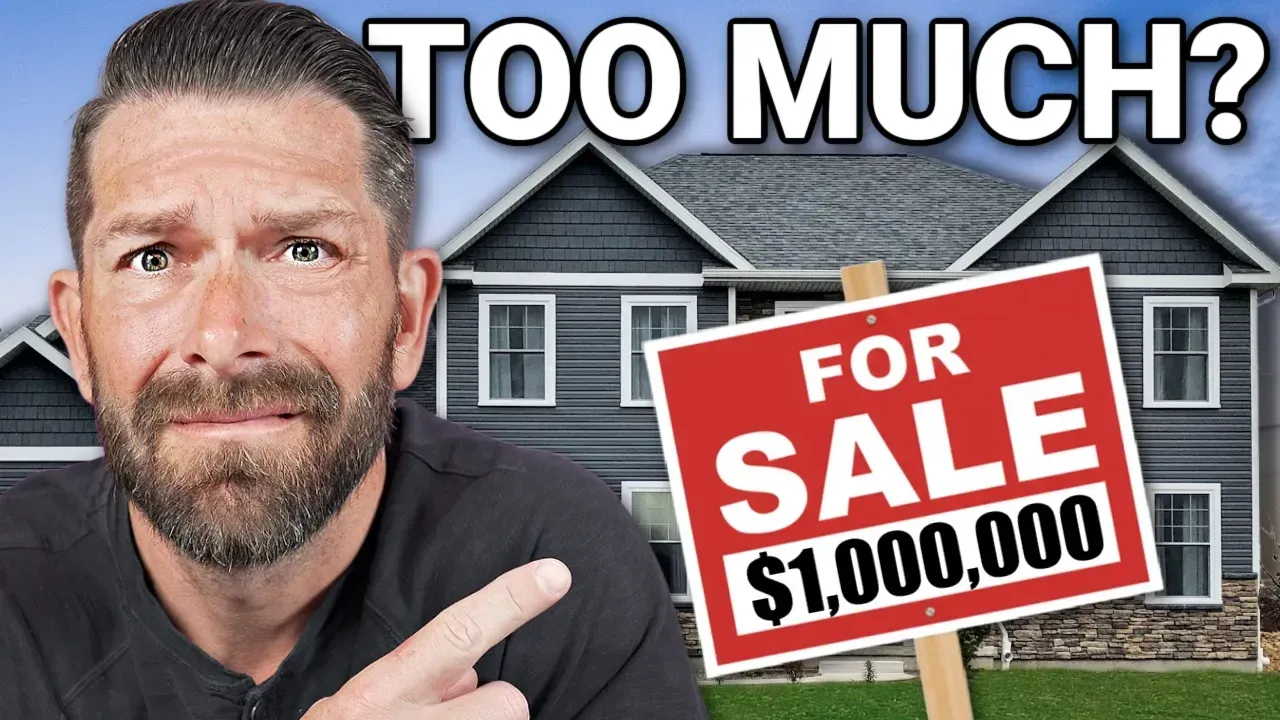
There's also a search bracket problem most sellers never think about. If your home is listed at $1,005,000, it won't even appear in results for buyers searching homes priced up to $1,000,000. That's an enormous pool of qualified buyers who never see your listing before the first showing ever happens.
The Buyers Who Do Come Are Looking for Problems
Let's say some buyers do walk through. What happens then? Instead of falling in love with the property, they're scrutinizing every detail, looking for flaws to justify the high price. That crack in the drywall, the older HVAC, the small third bedroom — everything becomes a reason to pass or to come in with a lowball offer. The emotional experience of the showing is working against you from the first step through the front door.
The Stigma of a Stale Listing
Your home gets the most attention in the first two to three weeks on the market. That's when the serious, educated buyers — the ones who have been watching inventory for months and are ready to move — show up. When a home sits too long, buyers assume one of two things: either it's overpriced, or something is wrong with it. Once that perception takes hold, it's nearly impossible to fully recover from.
The Real Cost: A Timeline That Sellers Need to See
Let me walk through what actually happens, because the pattern is consistent enough that it might as well be a script.
Weeks 1–2: Some showings, some online views. The seller feels cautiously optimistic. The agent reassures them the market has been a little slow.
Weeks 3–4: Activity slows significantly. No offers. The agent says to give it more time.
Month 2: The agent suggests a price reduction. The listing gets a brief algorithmic boost, then flattens again. Still no offers.
Month 3: Another reduction. Now the seller is chasing the market down instead of leading it. Every price cut signals to buyers that the seller is motivated — and motivated sellers get lower offers and harder terms.
The final outcome: The eventual sale price is often lower than what an honest agent suggested on day one. And that's before you factor in extra mortgage payments, carrying costs, and the mental exhaustion of having your home on the market for four months.
That is the real cost of overpricing. Not just time — money, leverage, and peace of mind.
I'd rather disappoint you now than disappoint you later. That's the honest summary of what separates a pricing conversation built on data from one built on what you want to hear.
Thinking About Selling in Orange County or Huntington Beach?
If you want an honest look at what your home is actually worth in today's market — real comps, real data, no inflated numbers — I'm happy to walk you through it. This is exactly the kind of strategy conversation I have with every seller before we go to market.
Schedule a Conversation with JebA Story You May Recognize
I've seen versions of this situation so many times it might as well be one story.
A couple — let's call them the Garcias — are getting ready to sell their home. They interview three agents. Two come in within $20,000 of each other. The third comes in $75,000 higher. They go with the third.
The first couple of weeks pass. A few showings. Some online views. Weeks three and four go by — crickets. Then the agent asks for a price reduction. Then another. By the time the Garcias get an offer, they've been on the market over 100 days. The final sale price is lower than what the two honest agents originally suggested — before carrying costs, extra mortgage payments, and four months of disruption to their daily lives.
All of that because they chose the agent who told them what they wanted to hear.
Here's another way to frame it. Imagine you're getting three bids on a kitchen remodel. Two come in around $80,000. One comes in at $50,000. You'd be suspicious of that low bid, not excited by it. The same skepticism should apply in reverse when one agent's listing price is $100,000 higher than everyone else's. That should raise a red flag — not make you feel good.
What Smart Pricing Actually Does For You
Most sellers say, "Let's start high and come down if we need to." I understand the logic. But buyers don't think that way. If a home is overpriced, they don't engage — they move on. You never even get the conversation started.
The goal isn't to test the market. The goal is to attract the market.
Smart pricing — whether that means pricing right at value or, depending on your situation, pricing just below market to generate urgency — does something overpricing never can. It puts buyers in competition with each other. When buyers compete, they make stronger offers, waive fewer contingencies, and close faster with cleaner terms.
That's what the right price gets you: more competition, better terms, and a less stressful close. The seller who chases the biggest number always loses. I've watched it happen too many times to count.
What to Ask Before You Sign a Listing Agreement
If you're interviewing agents in Orange County, Huntington Beach, or anywhere in Southern California, here are the questions that separate the agents who are working for you from the ones who are working for the listing.
Ask to see the actual comparable sales, not just the number
A good agent should show you the specific homes they used to arrive at your price. Same neighborhood. Similar size. Similar condition. How recently did they sell? What was the market doing at that time? Where were rates? Where was inventory? All of that context matters.
Ask how they arrived at the price
A strong agent can walk you through the reasoning and defend every dollar of it. If they stumble on that question, or if the answer is vague and reassuring rather than specific and data-driven, that's a red flag worth paying attention to.
Pay attention to how they communicate
Are they educating you and being straight with you — occasionally telling you things you might not want to hear? Or are they agreeing with everything you say? Those are two very different things, and the difference becomes obvious within the first twenty minutes of a conversation.
Choose the agent with the best plan, not the highest number
Pricing strategy is not just about the number on the listing. It's about timing, condition, positioning, how the home is presented online, how showings are managed, and how offers are negotiated. Ask what the full plan looks like. A thoughtful, specific answer is a good sign.
The Only Number That Actually Matters
At the end of the day, your home is worth what a ready, willing, and able buyer will pay for it today.
Not what you want. Not what Zillow estimates. Not what your neighbor got two years ago when rates were at 3% and buyers were fighting over everything on the market. Today's buyer, today's market — that is the only number that matters.
The market doesn't care what you need to net. It doesn't care what you paid for it years ago or what renovations you put in. I do care about those things — because selling a home is an emotional process, and I understand that. But my job is to make sure the data is in front of you before you make a decision, not after.
When you're ready to sell, don't hire the agent who makes you feel good in the moment. Hire the one who tells you the truth — even when it's not what you want to hear. The difference between those two conversations could be tens of thousands of dollars and months of your life.
Ready to Sell? Let's Start With the Truth.
If you're planning to sell a home in Orange County or Huntington Beach, I'd love to have an honest conversation about where your home actually stands in this market. Real comps. Real strategy. No fluff. If you're not local to me, I have a large referral network of agents who operate the same way — I'm happy to connect you with someone who will give you the same straight talk.
Get Your Honest Home Valuation