10 Worst Home Upgrades Before Selling — What to Avoid If You Want to Maximize Your Profit
If you're getting ready to list your home in Orange County or Huntington Beach and you're thinking about doing some upgrades first, slow down. Not every dollar you spend before you sell comes back to you — and some of those dollars never come back at all. After more than 20 years in Southern California real estate, what I've seen is this: the sellers who walk away with the most money aren't the ones who spent the most. They're the ones who spent the right money in the right places.
Before we go further, let me be clear about something. This isn't a list of things you should never do to your home. If you're staying long-term and you want to enjoy your space, go for it — make every upgrade you want. But if your goal is to sell and maximize your profit, you have to think about this differently. The moment you decide to sell, the home is no longer about what you like. It's about what the buyer is willing to pay for. And those two things are not always the same.
Here are 10 of the most common upgrades sellers make before listing their homes in Orange County and Huntington Beach — upgrades that either deliver little to no return or can actually hurt your sale.
The 10 Upgrades That Hurt More Than They Help
Installing Wall-to-Wall Carpet
This might be the most common mistake I see, and I understand the logic behind it. The carpet is worn, so you replace it before listing. Sounds reasonable. The problem is that buyers today don't want carpet — especially not in the main living areas. They want hardwood. They want tile. They want luxury vinyl plank. When a buyer walks into a home with brand-new carpet in the living room or on the stairs, they're not impressed. They're already calculating the cost to rip it out.
That means you've just spent thousands of dollars on something the buyer sees as a liability, not an asset.
Now, there's an exception worth noting: if you have carpet in the bedrooms and it's noticeably worn, replacing it can absolutely make sense. Bedroom carpet is a different conversation. But replacing carpet throughout the main living areas of the home — the downstairs, the open spaces — that's where sellers lose money, because those are exactly the spaces where buyers expect cohesive hard-surface flooring.
Overspending on a Backyard Patio or Outdoor Fire Feature
Outdoor living matters in Southern California. Nobody understands that better than someone who lives and works here. But there's a big difference between a functional, appealing outdoor space and an overbuilt one — and sellers cross that line more often than you'd think.
When you spend $10,000, $15,000, or $20,000 expanding a patio, adding a built-in fire pit, a built-in BBQ, and built-in everything else, you're not necessarily adding value. You're adding a feature that some buyers will love and others won't want at all. And the ones who don't want it? They're going to see reduced yard space, reduced flexibility, and more ongoing maintenance cost. A lot of buyers in Orange County still want usable grass. They want open space. Not a backyard dominated by hardscape.
Outdoor improvements become lifestyle features, not value drivers — and lifestyle features rarely come back dollar for dollar.
Adding a Swimming Pool
This one gets people fired up, especially here in Southern California where a pool seems like a no-brainer. But here's the honest truth: a pool is a personal decision, not an investment.
Yes, there are buyers who want a pool. But there's an equally large segment of buyers who don't want the maintenance, don't want the cost, don't want the liability, and frankly don't want their yard eaten up by water. That tension shrinks your buyer pool — and that's before you factor in higher insurance premiums, ongoing maintenance costs, and seasonal limitations in some markets.
You might spend $50,000 to $150,000 on a pool addition and realistically see a return of 30–40% of that investment when you sell. That's not a typo. If you want a pool because you'll use it and enjoy it — that's the right reason. But if you're adding one because you think it's going to help you sell, the numbers rarely support that decision.
Koi Ponds, Water Features, and Over-the-Top Landscaping
I've walked through homes with buyers who stood in the backyard and said, "This is stunning." Five minutes later, the same buyers said, "We'd probably remove this." That's the problem in a nutshell.
Exotic plants, elaborate water features, koi ponds — they look impressive but they send one clear message to buyers: this is expensive and time-consuming to maintain. Most buyers in today's market aren't looking for more responsibilities. They're looking for less. When something triggers a buyer's "what does this cost to upkeep" reaction, it stops being an asset and starts being a negotiating chip — often working against you.
Simple, clean, well-maintained landscaping consistently outperforms elaborate designs when it comes to actual sale impact.
Converting the Garage Into Living Space
This is one of the most impactful mistakes on the list. Sellers convert a garage thinking they're adding square footage and therefore value. But what they're actually doing is removing something buyers expect — and in many cases, something they're counting on.
A garage isn't just a place to park a car. It's storage. It's flexibility. It's a gym, a workshop, a home office overflow, a place for kids to spread out. When it's gone, that flexibility is gone. I've had buyers pass on homes entirely because the garage had been converted, and I've had others factor in the full cost of converting it back — which comes directly out of what they're willing to offer you.
The bottom line: if your garage conversion hasn't been properly permitted and doesn't count toward your home's legal square footage, you've spent money on something that doesn't add appraised value and actively deters a segment of buyers.
Not Sure What's Worth Doing Before You List?
Every home is different. Before you spend a dollar on upgrades, it's worth having a conversation about what will actually move the needle in your specific neighborhood — and what you can skip entirely.
Let's Talk About Your Home →Adding a Sunroom
Adding a sunroom feels like adding square footage, and conceptually that makes sense. More space, more value. But there's a disconnect between how sellers perceive sunrooms and how they're treated during the appraisal process.
In most cases, a sunroom does not count as conditioned living space. It doesn't receive a dollar-for-dollar value contribution in an appraisal. Buyers may see it as a nice bonus feature, but they're not going to pay a premium for it. You could spend $20,000 to $50,000 or more on a sunroom addition and recover very little of that when you sell — simply because the market doesn't price it the same way you did.
Over-Customizing a Home Office
Custom built-ins, integrated shelving, a dedicated desk system, specialty lighting — a highly customized home office can look genuinely impressive. The problem is what it does to the buyer's ability to visualize the room differently.
Buyers today want flexibility. They want to walk into a room and think, "This could be an office, or a bedroom, or a gym, or a playroom." When a room is hyper-customized for one purpose, it takes that flexibility away. And when buyers can't picture themselves using the space the way they want to use it, they don't pay top dollar for it. Sometimes they discount the property entirely.
A clean, functional room with good bones will outperform a heavily customized one almost every time.
Overbuilding a High-End Kitchen
Kitchens matter — nobody's arguing otherwise. Kitchens and bathrooms are where buyers tend to focus their attention, and a clean, updated kitchen will absolutely help your home sell. But there's a ceiling, and a lot of sellers in Orange County push past it.
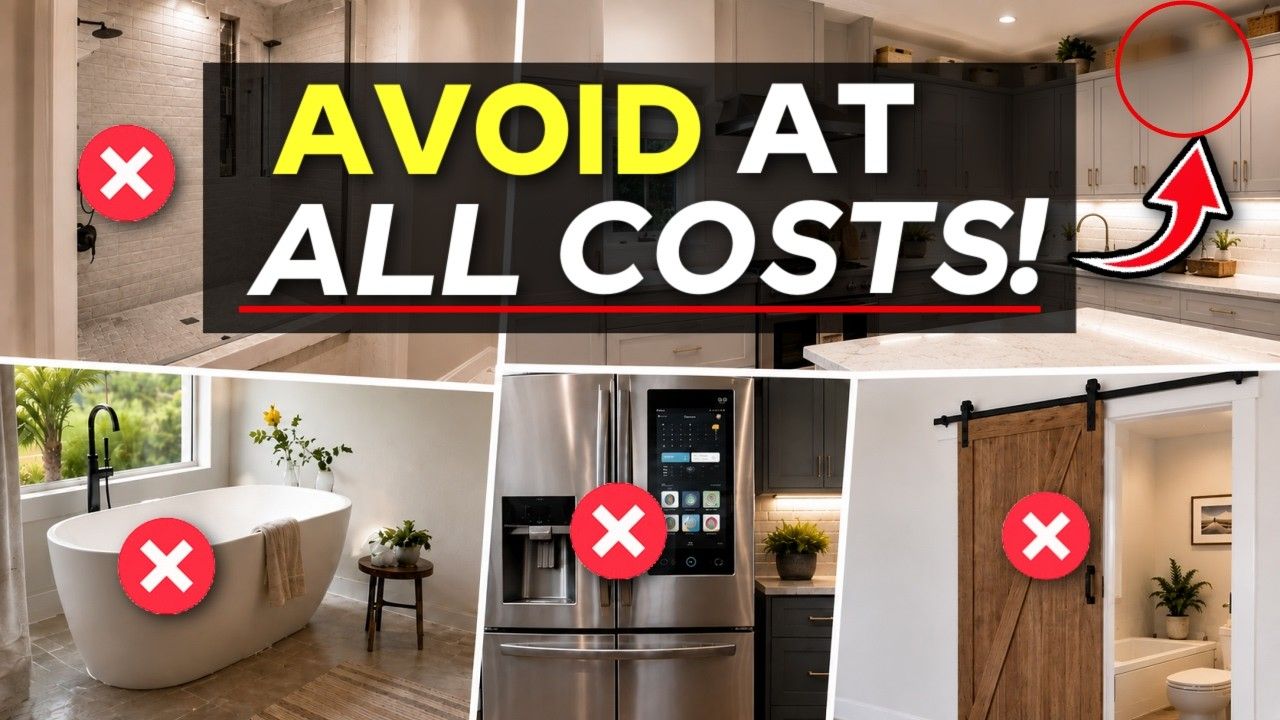
Dual refrigerators, $15,000–$20,000 appliances, oversized islands, ultra-premium finishes — when these features don't match the price point and character of the neighborhood, they don't come back to you at sale. In fact, overimproving for your neighborhood is one of the most common ways sellers leave money on the table. If your home is now the most upgraded property on the block, that can actually work against you because buyers compare it to comps, not to their dream kitchen.
Mid-range kitchen updates that are clean, cohesive, and current almost always generate a better return than luxury renovations that overshoot the market.
Adding a Master Suite Addition
More space is generally a good thing — but adding a master suite addition is one of the most expensive upgrades you can pursue, and the numbers rarely work in your favor when it's time to sell. These projects frequently cost six figures and recover only a fraction of that investment.
Beyond the cost, a poorly planned addition can affect curb appeal, disrupt the home's floor plan flow, and raise questions about permits and construction quality that buyers and their inspectors will scrutinize. And honestly? Most people don't spend the majority of their time in a luxury master suite. They sleep there. They wake up there. The day-to-day utility of the space doesn't match the cost of building it out for resale.
Luxury Bathroom Remodels
Just like kitchens, bathrooms matter — and just like kitchens, there's a point where you cross from "smart update" to "overimprovement." Heated floors, steam showers, boutique tile, spa-level fixtures — buyers don't reimburse you dollar for dollar for these finishes. They appreciate them, but they won't pay full replacement cost.
A bathroom that is clean, updated, and well-presented will perform well in the market. A bathroom that looks like a five-star hotel in a neighborhood of mid-range homes will not recoup its investment. Mid-range bathroom updates consistently outperform high-end remodels when you measure return on investment.
What This Means for Orange County and Huntington Beach Sellers
The Southern California real estate market — and Huntington Beach in particular — is competitive, high-value, and buyer-savvy. Buyers here are doing their research. They're working with agents. They know what things cost and they know what homes in your neighborhood are selling for.
That means overimproving doesn't just fail to add value — it can actively create friction. Buyers look at an overbuilt backyard, a converted garage, or a kitchen that outpaces every comparable and they start to wonder: what did this cost, and why? That skepticism can slow a sale, invite lower offers, or push certain buyers away entirely.
The sellers who do best in this market are the ones who understand the difference between making a home perfect and making it marketable. Perfect is expensive. Marketable sells.
The honest takeaway: Most sellers don't lose money because of the market. They lose money because of decisions they make before listing. Focus on what actually moves the needle — fresh paint, updated flooring where it makes sense, cleanliness, presentation, and the right price. Simple improvements consistently outperform expensive renovations when it comes to ROI.
What Actually Does Add Value Before You Sell
If you want to spend money before listing your home, here's where it actually pays off:
- Interior paint: Fresh, neutral paint is one of the highest-ROI improvements you can make. It's relatively inexpensive, it makes everything look cleaner and newer, and buyers respond to it immediately.
- Flooring updates in main living areas: If you have worn, dated flooring in primary spaces — entry, living room, kitchen — updating to LVP or refinishing hardwood can meaningfully improve buyer perception.
- Minor bathroom refreshes: New fixtures, updated lighting, a new vanity, and fresh caulk can transform a bathroom without the cost of a full renovation.
- Curb appeal basics: Pressure washing, fresh mulch, trimmed landscaping, a clean front door. First impressions happen before buyers walk inside.
- Deep cleaning and decluttering: This costs very little but has an outsized impact on how a home photographs, shows, and feels to buyers.
- Minor repairs and deferred maintenance: Fix what's broken, address what's visibly worn, and handle anything that might show up in an inspection report. These aren't glamorous, but they prevent price reductions and renegotiations after you're already in escrow.
In almost every case, these straightforward improvements will outperform expensive, large-scale renovations when it comes to your final sale price.
The Right Strategy Starts Before You Call a Contractor
Here's something I walk through with every seller I work with in Huntington Beach and Orange County: before you spend a single dollar on upgrades, we need to look at your home against current comps in your specific neighborhood. What's selling? What are buyers responding to? What does your home need to be competitive — and what would simply be money spent for the sake of spending?
That conversation changes depending on your price point, your neighborhood, your timeline, and the current state of the local market. There is no universal answer. What works in a North Huntington Beach neighborhood might be completely different from what's appropriate in Newport Coast or Aliso Viejo. The market is local, and your strategy needs to be local too.
The sellers I've worked with over the past 20+ years who walked away with the most money weren't the ones who renovated the most. They were the ones who made smart, targeted decisions — spent where it counted, skipped where it didn't, and priced their home correctly from day one.
When it comes to preparing a home for sale, marketable beats perfect every time. Buyers are paying for what a home is worth in today's market — not for what you spent improving it. Align your pre-listing strategy with buyer expectations, not personal preferences, and you'll come out ahead.
Ready to Sell Your Orange County Home the Right Way?
If you're planning to sell in Huntington Beach or anywhere in Orange County, I'd be glad to walk through exactly what makes sense for your specific home — and what you can skip. No pressure, no obligation. Just a straightforward conversation with someone who's been doing this for over 20 years.
Schedule a Consultation →Jeb Smith is a licensed real estate agent serving Huntington Beach, Orange County, and the greater Southern California area. With over 20 years of local market experience, he specializes in helping buyers, sellers, and investors make confident, well-informed real estate decisions.